 English


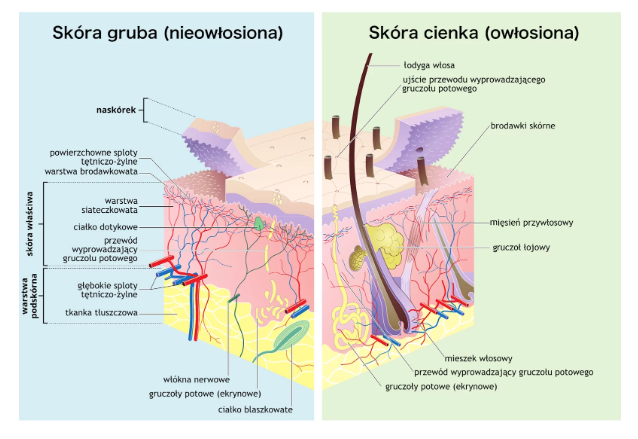
The skin is a highly dynamic organ that continuously renews itself through complex processes involving keratinocytes, epidermal differentiation and cellular regeneration.
GHK-Cu, a naturally occurring copper-binding peptide, has attracted scientific interest because of its potential role in skin regeneration and tissue-remodelling pathways. Research has also examined its influence on markers associated with epidermal cell renewal.
However, it is important to distinguish between biological mechanisms observed in laboratory or experimental models and clinically proven effects in humans.
This article explores the available research on GHK-Cu and its potential relationship with epidermal renewal, keratinization and skin thickening.
Skin Structure
The skin is one of the largest organs of the human body and provides an essential barrier between the body and the external environment.
It consists primarily of two major layers:
- the epidermis, which forms the outer protective surface;
- the dermis, which contains structures such as nerve endings, hair follicles, sebaceous glands and sweat glands.
Below the dermis lies the subcutaneous tissue, composed mainly of adipose and connective tissue. This layer contributes to insulation, energy storage and thermoregulation.
Key Functions of the Skin
Human skin performs numerous physiological functions.
Among its most important roles are:
- protection against environmental, physical and microbiological factors;
- regulation of body temperature;
- maintenance of water balance;
- sensory perception;
- participation in immune responses;
- support of normal metabolic and biochemical processes.
Maintaining normal epidermal renewal is therefore important for preserving the integrity and function of the skin barrier.
Understanding the Epidermis
The epidermis consists largely of cells called keratinocytes.
These cells originate in the deeper basal layer and gradually move toward the surface of the skin. During this process, they differentiate and eventually form the outermost protective layer.
The main epidermal layers include:
Basal Layer
The basal layer contains proliferating keratinocytes responsible for producing new epidermal cells.
Spinous Layer
Keratinocytes begin undergoing structural and functional changes as they move toward the surface.
Granular Layer
Further differentiation occurs, including processes involved in the formation of the skin barrier.
Stratum Corneum
The outermost layer consists primarily of mature corneocytes that form a protective barrier against the external environment.
What Is Excessive Keratinization?
Keratinization is a normal part of epidermal renewal.
In certain situations, however, an excessive accumulation of keratinized cells may result in areas of roughness or thickened skin.
Such changes may be associated with several factors, including:
- repeated mechanical pressure or friction;
- inadequate hydration;
- environmental exposure;
- ageing;
- genetic factors;
- certain dermatological conditions.
Common areas affected by thickened skin include the heels, soles of the feet, elbows and knees.
Persistent, painful or unusual skin thickening should be assessed by an appropriate healthcare professional, as different underlying conditions may require different approaches.
Conventional Care for Thickened or Keratinized Skin
Management depends on the cause and severity of the condition.
Common skincare approaches may include:
- moisturising products;
- emollients;
- keratolytic ingredients such as urea or salicylic acid;
- gentle exfoliation;
- reducing repeated pressure or friction;
- appropriate footwear when the feet are affected.
More persistent or severe changes may require professional dermatological assessment.
GHK-Cu and Epidermal Research
GHK-Cu is a copper-binding tripeptide that has been investigated in relation to several biological processes associated with skin repair and regeneration.
Experimental research has explored its potential influence on:
- extracellular matrix activity;
- cellular proliferation;
- tissue remodelling;
- inflammatory pathways;
- epidermal renewal.
Studies using laboratory skin models have reported changes in markers such as integrins and p63, which are associated with basal keratinocytes and epidermal regenerative activity. PubMed Central (PMC)
These findings are scientifically interesting, but they should not automatically be interpreted as evidence that GHK-Cu can treat or eliminate specific skin disorders in humans.
GHK-Cu, Keratinocytes and Skin Renewal
Keratinocytes in the basal layer of the epidermis play an important role in continuous skin renewal.
Some experimental studies suggest that copper-GHK may influence keratinocyte proliferation and the expression of cellular markers associated with epidermal renewal.
For example, laboratory skin-equivalent models have reported increased expression of p63 and certain integrins after exposure to GHK-Cu. PubMed Central (PMC)
These observations provide a possible biological basis for further research into GHK-Cu and skin regeneration.
However, evidence demonstrating that GHK-Cu can specifically prevent or eliminate hyperkeratosis or clinically significant skin thickening remains limited.
What About NL-GHK-Cu?
NL-GHK-Cu is a peptide formulation developed within the broader field of peptide research.
Research into modified peptide formulations often focuses on characteristics such as stability, delivery and biological activity.
Although the known biological properties of GHK-Cu provide an interesting basis for continued investigation, conclusions regarding specific effects of NL-GHK-Cu on keratinized skin should be made cautiously until sufficient controlled human research is available.
What Does the Current Evidence Tell Us?
GHK-Cu has a substantial body of experimental research investigating skin-related biological mechanisms.
Recent scientific reviews continue to highlight regenerative and tissue-remodelling effects in preclinical research, while also noting that high-quality clinical evidence in humans remains comparatively limited. PubMed
Therefore, the available evidence supports continued scientific investigation rather than definitive therapeutic claims.
Conclusion
GHK-Cu is an interesting peptide within the field of skin and regenerative research.
Laboratory studies suggest that it may influence processes involving keratinocytes, extracellular matrix activity and markers associated with epidermal renewal.
These findings may help researchers better understand how peptide-related pathways interact with normal skin regeneration.
However, current evidence does not establish NL-GHK-Cu as a proven treatment for hyperkeratosis, calluses or other forms of skin thickening.
For persistent or clinically significant skin changes, appropriate diagnosis and established dermatological care remain important.


The Effect of Peptides on Blood Sugar Levels – What Does the Research Say?
Joint supplementation – what ingredients should you choose to protect your joints?