 English


Therapy with the NL-Epithalon peptide allows for the restoration, maintenance, and protection of a properly functioning nervous system. Additionally, it is a therapy that significantly reduces the occurrence of consequences resulting from stressful situations.
|
Abstract: Stress is a mechanism that accompanies humans on a daily basis. Despite changes in living conditions, our physiological responses remain the same. Stress is a reaction designed to prepare us to cope with challenges arising in the environment and everyday life. Research on the effects of the NL-Epithalon peptide indicates its potential supportive action in helping the body cope with stress and reduce its negative consequences. Keywords: NL-Epithalon; stress; phases of reaction; symptoms of stress; nSMase |
Introduction
Stress and the inability to cope with it properly may contribute to the development of many somatic and mental disorders. It is an inseparable element of human life. Research indicates that stress plays a regulatory role in both health and disease. The way individuals cope with stress – effectively or ineffectively – constitutes an important psychological mechanism influencing health. Coping with stress results in both positive and negative emotions. The body, mind, and emotions are closely interconnected, and increasing empirical evidence confirms this relationship. The onset of disease, its course, and the possibility of recovery largely depend on a person’s mental state. NL-Epithalon, as a peptide with broad potential applications, is being studied in the context of supporting the body in stressful situations.
STRESS
The concept of stress is understood simultaneously as a reaction, stimulus, or transaction. Stress is defined as a complex response of the body to stimuli that disrupt its homeostasis, involving efforts to maintain internal balance in relation to external conditions. In this sense, stress is a response to stimuli – stressors. A stressor, through the nervous and hormonal systems, may trigger a generalized stress response involving the entire body. Two types of stress responses are distinguished: positive and negative. The positive response, called eustress, promotes health and motivates action. Distress, on the other hand, has a negative, destructive impact and is difficult to control.
An example of a stimulus-based definition of stress is the concept of life changes, according to which any change requiring increased adaptation is associated with greater psychological and physical burden. The social environment plays an important role in how an individual experiences stress. Stressful events may lead to reduced immunity and more serious health consequences.

PHASES OF THE STRESS RESPONSE
- Alarm phase: the stage of responding to a new situation as a challenge. Physicochemical changes occur to prepare the body to cope with demands.
- Adaptation phase: the body learns to effectively cope with the challenge without excessive disturbances. If the situation is managed, balance is restored. Otherwise, the exhaustion phase may occur.
- Exhaustion phase: prolonged stimulation leads to depletion of the body’s resources and may result in psychosomatic diseases.
CHANGES IN THE HUMAN BODY ASSOCIATED WITH STRESS
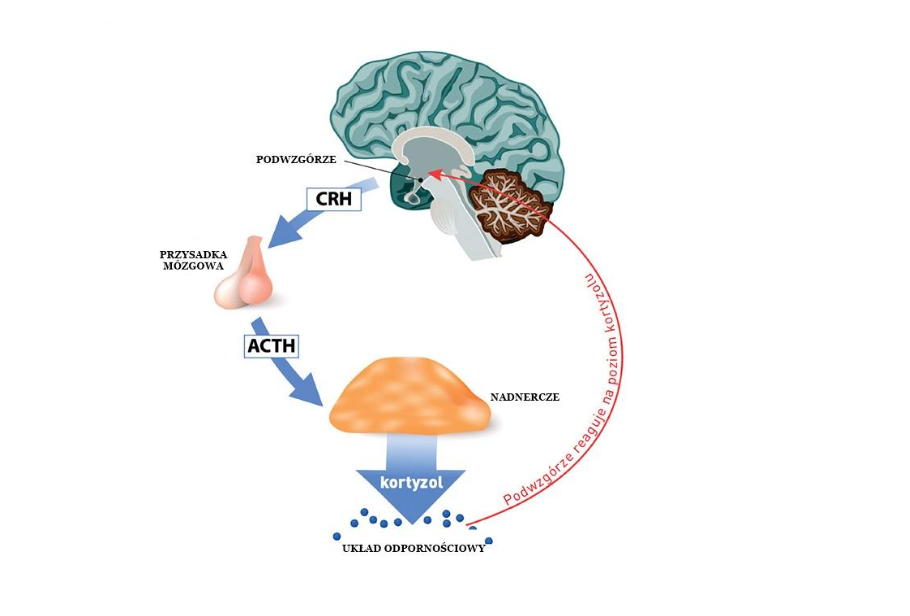
Chronic stress leads to significant changes in the body. The adrenal glands secrete stress hormones, increasing concentration and alertness and preparing the body for increased effort. Heart rate and breathing accelerate, blood is directed to major muscle groups, and digestive processes slow down. The pituitary gland initiates the secretion of hormones that raise blood pressure and glucose levels, providing the energy necessary for action. Severe stress may impair the functioning of the digestive, reproductive, and immune systems. The body focuses on functions essential for survival, resulting in increased muscle tension, accelerated heartbeat, and heightened emotional arousal.

SYMPTOMS OF EXCESSIVE STRESS
- Agitation and excessive emotional reactions;
- Withdrawal, isolation, weakness;
- A feeling of paralysis and inability to act.
Cognitive symptoms:
- Memory and concentration difficulties;
- Problems with situation assessment;
- “Tunnel thinking”;
- Racing thoughts.
Emotional symptoms:
- Irritability and low mood;
- Anxiety and feeling overwhelmed;
- Depressive states.
Physical symptoms:
- Body aches and muscle tension;
- Digestive problems;
- Reduced immunity;
- Sleep disturbances.
NL-EPITHALON FOR STRESS
The tetrapeptide NL-Epithalon has demonstrated in experimental studies potential supportive effects on pineal gland function and increased neuronal resistance to stress through stimulation of antioxidant enzyme systems. It has also been described as potentially protective against changes induced by osmotic stress. These mechanisms remain under investigation.
NL-EPITHALON AS A FACTOR SUPPORTING PROTECTION AGAINST STRESS
Experimental studies have analyzed the influence of NL-Epithalon on thymocyte proliferative activity and nSMase activity in the cerebral cortex under stress conditions. The results suggest potential protective effects at the level of cellular signal transduction; however, these issues require further clinical research to clearly confirm effectiveness and safety in humans.

BIBLIOGRAPHY
1. D. Sibarov, R. Kovalenko, V. Malinin, V. Khavinson, Epitalon influences pineal secretion in stress-exposed rats in the daytime. 2002; 23(5-6):452-4
2. L. Kozina, Investigation of antihypoxic properties of short peptides. 2008; 21(1):61-7
3. V. Khavinson et al., Effect of epitalon on interleukin-1beta signal transduction and thymocyte response under stress. 2002; 23(5-6):411-6


The effect of BPC-157 on injuries to the musculoskeletal and skeletal systems. Peptide therapy supports wounds, burns, and cuts.
Can peptides be taken orally?