 English



Joint discomfort can affect mobility, physical activity and everyday quality of life. Depending on its cause, it may be associated with physical strain, injury, ageing, inflammation or changes within the structures surrounding a joint.
In recent years, peptides have attracted growing scientific interest in areas related to tissue repair and musculoskeletal research. One compound frequently discussed in this context is BPC-157, a synthetic peptide that has primarily been investigated in laboratory and animal studies.
But what does current research actually tell us about BPC-157 and joint health? In this article, we look at the available evidence, possible biological mechanisms and the important limitations of current research.
What Are Peptides?
Peptides are short chains of amino acids that participate in many biological processes in the body. Depending on their structure, naturally occurring peptides can be involved in cellular communication, metabolism, immune signalling and tissue-related processes.
Because of these biological roles, researchers are studying different peptides to better understand how they may interact with mechanisms involved in recovery, inflammation and tissue maintenance.
One peptide receiving attention in experimental research is BPC-157.
BPC-157 and Joint Research
BPC-157 is a synthetic peptide consisting of 15 amino acids. Experimental research has explored its potential interaction with processes associated with tissue repair, blood-vessel formation and inflammatory signalling.
Much of the available evidence comes from preclinical models, including laboratory and animal studies examining muscles, tendons, ligaments and other connective tissues.
These studies have generated scientific interest in whether BPC-157 could influence biological pathways relevant to musculoskeletal recovery. However, findings from preclinical research cannot automatically be translated into proven benefits for humans.
How Is BPC-157 Being Studied?
Several biological mechanisms have been investigated in relation to BPC-157.
Tissue-Repair Pathways
Preclinical studies have explored whether BPC-157 may interact with processes involved in tissue repair and recovery.
Researchers have investigated its effects in experimental models involving tendons, ligaments, muscles and other connective tissues.
Inflammatory Signalling
Inflammation is part of the body's natural response to injury or tissue stress.
Experimental studies suggest that BPC-157 may influence certain inflammatory pathways. However, this research remains preliminary, and clinically meaningful effects in humans have not yet been established.
Blood-Vessel and Cellular Processes
Research has also examined the possible interaction of BPC-157 with angiogenesis—the formation of new blood vessels—as well as cellular signalling pathways involved in tissue repair.
These mechanisms are scientifically interesting because adequate blood supply and cellular communication are important components of normal recovery processes.
What Does Research Say About BPC-157 and Joint Pain?
Research into BPC-157 and musculoskeletal health is still at an early stage.
Animal and laboratory studies have reported potentially interesting findings relating to tendons, ligaments, muscles and bone tissue. A small amount of human research has also explored BPC-157 in relation to musculoskeletal discomfort.
However, the amount of high-quality human evidence remains very limited.
Large, controlled clinical trials are still needed to determine:
-
whether BPC-157 produces meaningful effects in humans,
-
which mechanisms are clinically relevant,
-
what doses or administration methods would be appropriate,
-
and what short- and long-term safety considerations may exist.
For this reason, preliminary findings should not be interpreted as confirmation that BPC-157 can treat joint pain or joint-related medical conditions.
Can BPC-157 Be Considered a Treatment for Joint Problems?
At present, available scientific evidence is not sufficient to describe BPC-157 as an established treatment for joint pain, arthritis, injuries or other musculoskeletal conditions.
Most of the research frequently discussed online comes from experimental models rather than large-scale human clinical studies.
This distinction is important because promising laboratory findings do not necessarily result in the same outcomes in people.
Anyone experiencing persistent joint pain, swelling, limited mobility or symptoms following an injury should seek advice from an appropriately qualified healthcare professional.
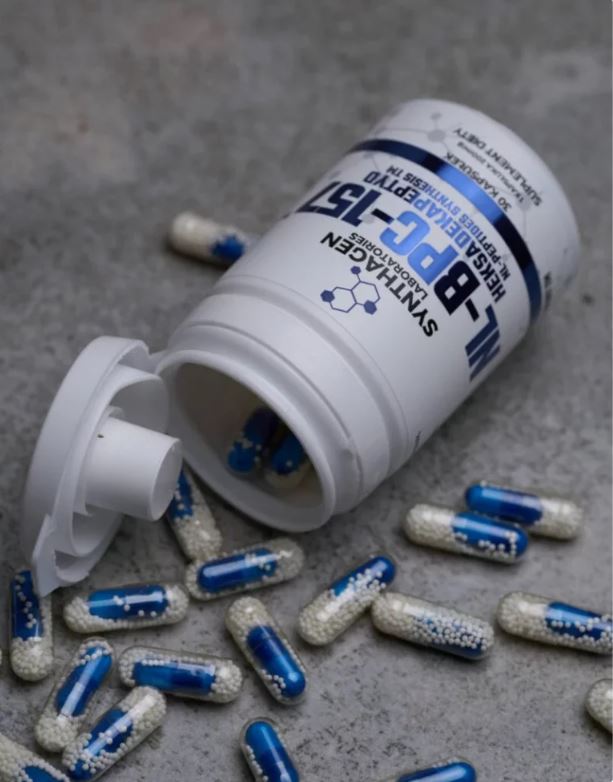
BPC-157 Research at Synthagen Labs
At Synthagen Labs, peptides such as BPC-157 are presented within a research-focused context.
Available BPC-157 research products include:
-
NL-BPC-157™ (Hexadecapeptide) – 3 PCS
-
NL-BPC-157™ (Hexadecapeptide) – 5 PCS
-
NL-BPC-157™ (Hexadecapeptide) – 9 PCS
Product specifications and additional information can be found on the relevant product pages.
Summary
BPC-157 has attracted considerable interest in experimental research related to tissue repair and musculoskeletal biology.
Preclinical studies have explored its interaction with processes associated with connective tissue, inflammatory signalling, angiogenesis and recovery. These findings make BPC-157 an interesting subject for continued scientific investigation.
However, human evidence remains limited, and current research does not establish BPC-157 as a proven treatment for joint pain or joint-related medical conditions.
Further well-designed clinical studies are required to better understand its biological effects, safety profile and potential relevance to human musculoskeletal health.
This article is provided for educational and research-information purposes only. It is not intended as medical advice or as a recommendation to diagnose, prevent or treat any disease or medical condition.


The Biological Role of Amino Acids, Proteins and Peptides in the Human Body
Peptides - how often can they be used?