 English



Peptides are increasingly recognized as one of the most important directions in the development of modern pharmacology. Thanks to their selectivity, high efficacy, and minimal side effects, they are becoming a genuine alternative to conventional synthetic drugs. Can we truly speak of peptides as the future of medicine? In this article, we will examine their applications, advantages, and the challenges that still lie ahead.
What are peptides and why are they gaining such popularity?
Peptides are short chains of amino acids that perform important biological functions.
The human body produces many peptides of its own, which regulate key processes — from metabolism and tissue regeneration to immunity. For this reason, their application in pharmacology is a natural step, allowing for the precise imitation or support of physiological processes.
Their growing popularity is due, among other things, to the fact that they:
- Act selectively, targeting specific receptors.
- Rarely cause side effects, which increases the safety of therapy.
- Are easily modified, allowing them to be adapted to individual therapeutic needs.
 Peptides are already being used in oncology, endocrinology, dermatology, and regenerative medicine, among other fields. The development of controlled-release delivery technology, which we offer in our store, further enhances their effectiveness.
What advantages make peptides a revolution in therapy?
Peptides offer a unique combination of efficacy and safety.
Unlike conventional synthetic drugs, which often act systemically and non-selectively, peptides are capable of acting precisely on specific molecular targets. This makes it possible to minimize adverse effects while maximizing effectiveness. The main advantages of pharmacological peptides:
- High biocompatibility – they closely resemble the body's natural compounds.
- Short half-life – their action is easy to monitor and control.
- Potential for therapy personalization – they can be modified chemically and structurally.
- Ideal for targeted therapies – for example in the treatment of cancer, obesity, or neurodegenerative diseases.
The introduction of controlled-release technology further eliminates the problem of rapid degradation and ensures stable action for many hours or even days.
In which areas of medicine are peptides finding the greatest application?
The greatest successes of peptides are observed in modern targeted therapies.
They are particularly valued in aesthetic medicine, endocrinology, and sports medicine. In these fields they act quickly, effectively, and precisely — which means they surpass conventional active substances.
Examples of peptide applications:
| Field | Application | Effect |
|---|---|---|
| Dermatology | Biomimetic peptides | Improved elasticity, reduction of wrinkles |
| Oncology | Targeted peptides | Inhibition of cancer cell growth |
| Endocrinology | GHRP, GHRH peptides | Stimulation of growth hormone |
| Immunology | Immunomodulating peptides | Regulation of immune response |
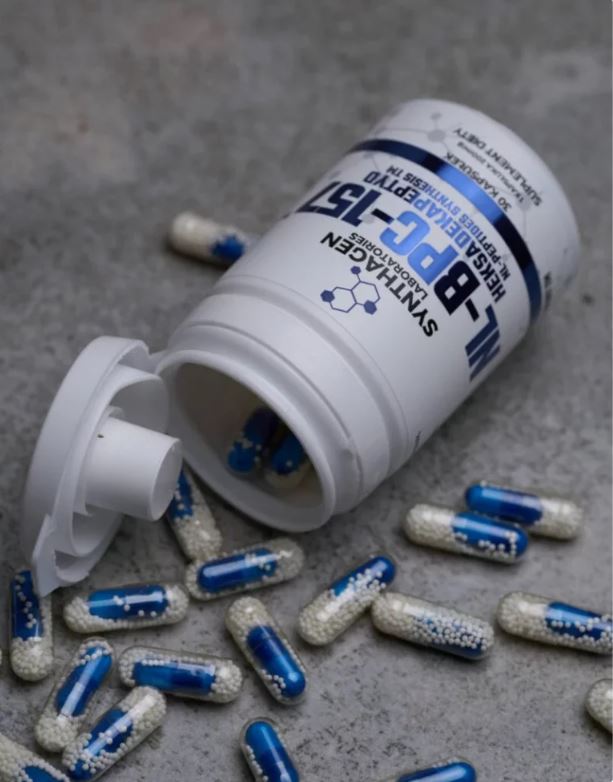
| Regenerative medicine | BPC-157, TB-500 | Accelerated tissue regeneration |
Such a broad spectrum of action opens the way for the development of new therapies that will be more closely tailored to the individual patient.
What challenges lie ahead for the development of peptide therapies?
The main limitations are stability, route of administration, and production costs.
Although peptides have enormous potential, their natural structure makes them susceptible to enzymatic degradation. This is why the technology for their stabilization and delivery is so important — and this is where controlled-release solutions, available in our offer, play a key role.
Challenges that need to be overcome:
- Short duration of action without carrier technology.
- Production costs — still higher than those of conventional drugs.
- Complex administration methods — some peptides require injection.
- Regulatory requirements — new therapies must undergo the full registration procedure.
Technological progress, particularly in the field of nanocarriers and hydrogels, is gradually resolving these issues, enabling convenient, effective, and long-lasting peptide action.
FAQ – Frequently Asked Questions
1. Are peptides safe?
Yes, most peptides have a very favorable safety profile and are well tolerated by the body.2. Can I use peptides on my own?
We always recommend consulting a doctor or pharmacist, especially in the context of targeted therapy.3. Why is it worth buying peptides with controlled-release technology?
It ensures greater effectiveness, less frequent administration, and improved safety of therapy.4. Where can I buy verified peptides?
In our store you will find a wide range of peptides tailored to your needs — with advanced technology and certified quality.Would you like to begin a peptide-based therapy?
Contact us – we will help you find the best solution with a guarantee of effectiveness and safety.


NL-Epithalon in the supportive therapy of obesity treatment
Biological processes behind hair loss