 English


BPC-157 is a synthetic peptide that has attracted scientific interest because of its potential involvement in tissue repair, inflammatory signalling and regenerative processes.
Experimental studies have investigated BPC-157 in several areas related to skin biology, including wound healing, vascular processes, collagen formation and inflammatory responses. However, much of the available evidence comes from laboratory and animal research, and human clinical evidence remains limited.
This article explores current research into BPC-157 and its potential relationship with skin regeneration and selected dermatological processes.
Understanding the Skin
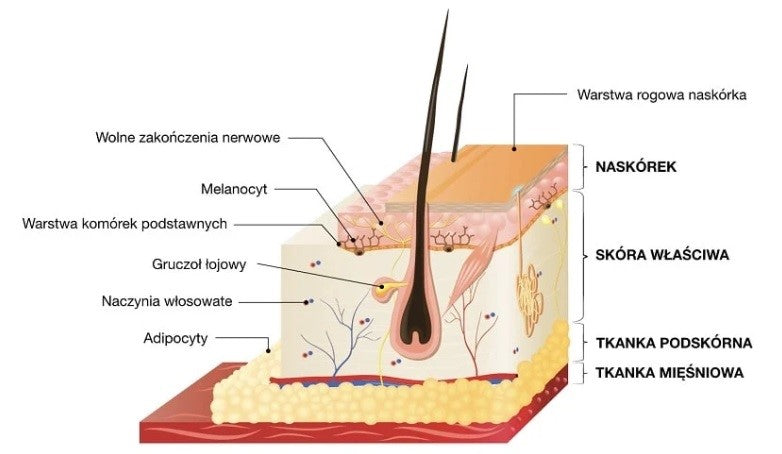
The skin is one of the largest organs of the human body and acts as an important protective barrier between the body and the external environment.
It consists primarily of three layers:
-
the epidermis;
-
the dermis;
-
subcutaneous tissue.
The skin also contains structures such as sweat and sebaceous glands, hair follicles, blood vessels, lymphatic vessels and nerve endings.
In addition to providing physical protection, the skin contributes to temperature regulation, water balance, immune activity, sensory perception and several metabolic processes.
Skin Conditions and Dermatoses
Dermatoses are conditions that affect the skin and may involve the epidermis, dermis, blood vessels, nerves or associated structures.
Their causes vary considerably and may include:
-
bacterial or fungal infections;
-
inflammatory processes;
-
immune-system activity;
-
genetic factors;
-
environmental exposure;
-
irritation or injury.
Common examples include folliculitis, atopic dermatitis, psoriasis and rosacea.
Treatment of these conditions depends on their underlying cause and severity and should be determined by an appropriately qualified healthcare professional.
BPC-157 and Skin Regeneration Research
BPC-157 has been studied experimentally for its potential effects on biological processes involved in tissue repair.
Preclinical research has explored possible interactions with:
-
fibroblast activity;
-
collagen formation;
-
epithelial cell migration;
-
inflammatory signalling;
-
angiogenesis;
-
tissue regeneration.
These mechanisms have generated interest in the peptide's possible role in wound-healing research.
However, experimental findings should not be interpreted as confirmation that BPC-157 is an established treatment for skin diseases.
BPC-157 and Folliculitis Research
Folliculitis is inflammation of the hair follicles and may result from bacterial infection, irritation, shaving, friction or other factors.
Hair follicles are an important component of the skin barrier, and healing after follicular injury involves epithelial cell migration, fibroblast activity and inflammatory responses.
Experimental BPC-157 research has examined some of these regenerative mechanisms, particularly those associated with tissue repair and inflammatory signalling.
At present, however, there is insufficient clinical evidence to establish BPC-157 as a treatment or preventive therapy for folliculitis.
BPC-157 and Atopic Dermatitis
Atopic dermatitis is a chronic inflammatory skin condition commonly associated with itching, dryness, redness and disruption of the skin barrier.
Its development involves a complex interaction between genetic, environmental and immune factors.
Research into BPC-157 has explored its potential interaction with inflammatory and immune pathways. These mechanisms are scientifically interesting because immune signalling plays an important role in several inflammatory skin conditions.
Nevertheless, further clinical studies are required before conclusions can be made about the effectiveness or safety of BPC-157 in people with atopic dermatitis.
Research Into BPC-157 and Skin Wound Healing
Wound healing involves several overlapping biological processes, including inflammation, formation of new tissue, collagen synthesis and development of blood vessels.
Preclinical studies of BPC-157 have investigated its possible influence on:
-
collagen production;
-
fibroblast migration;
-
vascular endothelial growth factor (VEGF) pathways;
-
formation of new blood vessels;
-
inflammatory responses;
-
tissue remodelling.
These observations have contributed to interest in BPC-157 within regenerative research.
However, results from experimental models cannot automatically be translated into proven clinical benefits in humans.
BPC-157 and Skin Necrosis Research
Skin necrosis occurs when tissue is severely damaged due to factors such as inadequate blood supply, trauma, burns, frostbite or infection.
Experimental studies have investigated BPC-157 in relation to vascularisation, collagen organisation and tissue-repair mechanisms.
Some preclinical findings suggest that the peptide may influence biological pathways involved in tissue recovery.
Further research, particularly controlled human studies, is required to determine whether these findings have clinical relevance.
BPC-157 and Psoriasis Research
Psoriasis is a chronic immune-mediated skin condition characterised by accelerated skin-cell turnover and inflammatory activity.
Researchers have explored numerous biological pathways involved in psoriasis, including immune signalling, antimicrobial peptides and inflammatory mediators.
BPC-157 has been discussed experimentally in relation to some inflammatory and tissue-regeneration pathways.
At present, there is not sufficient clinical evidence to establish BPC-157 as a therapy for psoriasis or to demonstrate that it can prevent flare-ups or progression of the condition.
BPC-157 and Rosacea Research
Rosacea is a chronic inflammatory skin condition that most commonly affects the face.
Its development may involve vascular, inflammatory, environmental, genetic and microbial factors.
Because inflammatory signalling plays an important role in rosacea, experimental compounds that influence inflammation and tissue responses remain subjects of scientific interest.
BPC-157 has been investigated for several biological mechanisms related to inflammation and tissue regeneration, but evidence supporting its use for rosacea remains limited.
What Does Current Research Tell Us?
Research surrounding BPC-157 and skin biology is primarily focused on mechanisms such as:
-
wound repair;
-
fibroblast activity;
-
collagen formation;
-
angiogenesis;
-
inflammatory signalling;
-
epithelial regeneration.
These findings make BPC-157 an interesting compound for continued scientific investigation.
However, it is important to distinguish between biological mechanisms observed in experimental research and clinically established treatments.
Most BPC-157 research remains preclinical, and robust human clinical trials are still needed to determine its safety, effectiveness and appropriate applications.
Conclusion
BPC-157 continues to attract attention in regenerative and skin-related research because of its potential interaction with several biological processes involved in tissue repair.
Experimental studies have investigated areas including wound healing, collagen production, vascularisation, inflammatory signalling and tissue regeneration.
While these findings are scientifically interesting, they should not be interpreted as proof that BPC-157 treats dermatological conditions such as folliculitis, atopic dermatitis, psoriasis or rosacea.
Further controlled human studies are necessary before definitive conclusions can be made regarding its clinical effectiveness, safety or therapeutic applications.
References
-
Takeo M, Lee W, Ito M. Wound Healing and Skin Regeneration. Cold Spring Harbor Perspectives in Medicine. 2015. DOI: 10.1101/cshperspect.a023267.
-
Wolk K, Kunz S, Witte E, Friedrich M, Asadullah K, Sabat R. IL-22 increases the innate immunity of tissues. Immunity. 2004;21:241–254. DOI: 10.1016/j.immuni.2004.07.007.


Injuries in powerlifting
BPC-157 and the Digestive System: Research on Gastrointestinal Protection