 English



Abstract: The observed increase in antibiotic resistance is currently one of the main problems of modern medicine. Inappropriate use and overuse of available preparations has significantly reduced their effectiveness due to the emergence of an increasing number of resistant microorganisms. Current research aims to develop more effective therapeutic agents acting on pathogenic organisms through defense mechanisms found in nature (antimicrobial peptides) and their possible modifications, resulting in their analogues.
Keywords: antimicrobial peptides; chemical modifications; cyclization; drug conjugates; lipidation
List of abbreviations: AMP – antimicrobial peptides
The concept of drug resistance
Drug resistance is a term referring to the resistance that pathogens and parasites possess against the action of drugs. This means that these pathogens have the ability to live and reproduce in the presence of a drug that should cause their destruction or inhibition, yet this does not occur. Drug resistance can be divided into two types: innate drug resistance and acquired drug resistance. While the former is a characteristic typically associated with microbes, acquired resistance is the result of contact with a drug, through alteration of their DNA material, which leads to the development of resistance to the drug.
Antimicrobial peptides – characteristics
Antimicrobial peptides (AMP) are a group of compounds composed of 10 to 50 amino acid residues. The net charge ranging from +2 to +9 results from the presence of L-arginine, L-lysine, or L-histidine residues in the peptide chain. AMP synthesis can proceed in two ways. The first occurs through ribosomal mRNA translation taking place in all organisms, while the second involves non-ribosomal peptide synthesis carried out mainly by bacteria. Peptides synthesized via non-ribosomal synthesis, such as antibiotics based on polymyxins and gramicidin S, find wide application with regard to their antimicrobial activity. Increasingly, however, due to their properties stimulating innate immunity, peptides that are products of ribosomal synthesis are finding application. Antimicrobial peptides are isolated from various organisms.
Defensins as animal AMPs
The group of antimicrobial peptides has mostly been isolated from fish, amphibians, and mammals. The largest amount has been observed in phagocytes, neutrophils, macrophages, and secretions of epithelial cells. Among the compounds with the greatest biocidal activity are defensins, due to their properties allowing modulation of the host organism's immune response. Defensins are amphipathic antimicrobial peptides that are compounds rich in basic amino acid residues and L-cysteine, found in animal and plant organisms. Their biocidal activity is directed against a wide range of Gram-positive, Gram-negative bacteria, and fungi. Three classes of defensins are distinguished: α-, β-, and θ-, which differ from each other in the topology of disulfide bridges.
The most well-known α-defensins are: HNP1-4 produced mainly in the placenta, cervix, and intestinal mucosa, compounds HD5 and HD6 found in salivary glands, the wall of the digestive tract, urinary tract, and ocular mucosa, as well as NP5 present in Paneth cells. β-defensins constitute the most diverse class of AMP, having been shaped over the longest period of evolution due to their detection in the genetic material of all vertebrates classified to date. The most recently discovered are θ-defensins, which include peptides RTD1-3. Defensins exhibit a broad spectrum of antimicrobial activity by actively participating in the immunological defense of organisms; for example, human α-defensin HD5 effectively eliminates infections caused by Salmonella typhimurium and Staphylococcus aureus, while RTD-1 exhibits biocidal activity against Escherichia coli.

Plant AMP peptides
Antimicrobial peptides are found in all plant species. A characteristic feature of plant AMPs is the presence of L-cysteine residues and several disulfide bridges, which contribute to maintaining a compact structure ensuring proteolytic and chemical resistance. Plant AMPs, which include in particular thionins, defensins, and cyclotides, are composed of 45 to 47 amino acid residues in the chain. Two subgroups of thionins are distinguished: 8c, which possess eight L-cysteine residues in the sequence forming four disulfide bridges, and 6c, which have six such residues and correspondingly three -S-S bonds.
Antimicrobial peptides – properties
As an innovative method of treating drug resistance, antimicrobial peptides are being used increasingly and with greater success. They exhibit high activity against Gram-negative and Gram-positive bacteria, viruses, and fungi. Additionally, antimicrobial peptides demonstrate the ability to neutralize bacterial toxins, inhibit pro-inflammatory reactions and biofilm formation processes, and accelerate wound healing.
Mechanism of AMP penetration into the cell
The penetration of AMPs into bacterial cells can occur through various mechanisms. In the vast majority of cases, disintegration of microbial cell membranes occurs through lysis, via electrostatic and hydrophobic interactions between positively charged fragments of L-arginine or L-lysine residues and negatively charged regions of bacterial membranes. Three main models of the method by which antimicrobial peptides penetrate the outer envelopes of microorganisms are distinguished: the barrel-stave model, the carpet model, and the toroidal model.
a) The barrel-stave model is based on the interaction of amphipathic peptides with an α-helical structure with the bacterial membrane, with the formation of transmembrane channels or pores with hydrophilic fragments directed toward their interior. This causes AMPs to be incorporated into the lipid scaffold of the membrane in a vertical position and disrupts the transmembrane potential and ion gradient. As a result of these phenomena, ATP synthesis is inhibited and membrane permeability increases, leading to cell swelling and osmosis;
b) The carpet model involves the binding of the peptide to the membrane and the formation of a "carpet" on its surface. The peptide chains arrange themselves on the outside of the membrane in such a way that their hydrophilic regions face the hydrophilic fragments of phospholipids, and the hydrophobic regions face the membrane core. As a result of electrostatic interactions, the positively charged fragments of the AMP peptide chain bind to negatively charged phospholipids, membrane permeability is restricted by the peptide carpet structure, and the membrane is subsequently destroyed, ultimately forming micellar structures;
c) The toroidal pore model is based on AMPs aggregating on the surface of the lipid bilayer, causing it to bend inward. The hydrophilic regions of the peptide chain bind to the polar heads of membrane lipids, leading to membrane disintegration and the formation of pores larger than those in the barrel-stave model.
Examples of chemical modifications of AMPs
Despite their numerous advantages, antimicrobial peptides also have many limitations associated with their application, which consequently leads to the design of synthetic analogues containing the sequence key to antimicrobial activity or based on native AMPs. Below we present examples of some of them:
1. Cyclization
Four types of cyclization of the peptide chain of natural AMPs are known: between the N- and C-terminal fragments of the chain, between the N- or C-terminus of the peptide chain and a functional group located in the side chain of one of the amino acids present in the sequence, and within the side chains themselves (Fig. 4). The effect of these processes is an improvement in peptide stability, which translates into greater resistance to degradation by proteolytic enzymes. AMP analogues resulting from cyclization modification exhibited properties such as: increased antimicrobial activity against Escherichia coli and Bacillus subtilis strains, biocidal activity against Gram-positive bacteria (various strains of Staphylococcus aureus and Enterococcus faecalis, Micrococcus luteus, Bacillus subtilis, Bacillus cereus, Corynebacterium bovis) and Gram-negative bacteria (Escherichia coli, Shigella dysenteriae, Salmonella enteritidis, Proteus vulgaris, Proteus mirabilis, Serratia marcescens, Pseudomonas aeruginosa, Klebsiella pneumoniae), as well as the use of this AMP analogue in skin burns, post-operative wound care, and infection prevention.
2. Drug conjugates
Another type of chemical modification of AMPs is covalent binding with antibiotics, which improves their antimicrobial activity and reduces the therapeutic dose of the drug, thereby eliminating the occurrence of adverse effects. AMP analogues resulting from drug conjugate modification exhibited properties such as: increased antimicrobial activity against Escherichia coli and Bacillus subtilis strains, biocidal activity against Gram-positive bacteria, lack of toxicity to epithelial cells and human erythrocytes, biocidal activity against staphylococcal strains, and use of the analogue in the treatment of community-acquired pneumonia, acute bacterial sinusitis, and pyelonephritis.
3. Lipidation
One of the most important post-translational modifications is lipidation, which, in addition to regulating the functions of peptides and proteins, also causes an increase in their affinity for cell membranes. The application of designed analogues is determined by the quantity and type of attached fatty acids and the length of the carbon chains. The incorporation of lipid groups into peptide chains allows, among other things, alteration of the water solubility of newly synthesized compounds, their capacity for self-organization, and their thermal stability. AMP analogues resulting from lipidation modification exhibited properties such as: increased antimicrobial activity against Gram-positive bacteria (Staphylococcus aureus, Staphylococcus epidermidis, Bacillus subtilis, Enterococcus faecalis), Gram-negative bacteria (Escherichia coli, Klebsiella pneumoniae, Proteus vulgaris, Pseudomonas aeruginosa), and fungi (Candida albicans, Candida tropicalis, and Aspergillus brasiliensis).
Summary
One of the significant problems of modern medicine is the frequent use of antibiotics, which results in the development of new, resistant microbial species. A way to eliminate this growing problem may be the use of antimicrobial peptides, which are a component of the organism's innate immune system. The term AMP most commonly refers to compounds with a positive charge and an amphipathic structure, which is responsible for modulating their antimicrobial properties against a wide range of bacteria, viruses, and fungi. The high production costs and limited bioavailability of natural AMPs have necessitated the search for new model compounds whose activity is based on previously identified mechanisms.
Bibliography
1. Veltri D, Kamath U, Shehu A, Deep learning improves antimicrobial peptide recognition. 2018; Bioinformatics 34: 2740–2747;
2. Manzini MC, Perez KR, Riske KA, Bozelli JC Jr, Santos TL, da Silva MA, Saraiva GK, Politi MJ, Valente AP, Almeida FC, Chaimovich H, Rodrigues, Peptide : lipid ratio and membrane surface charge determine the mechanism of action of the antimicrobial peptide BP100. 2014; Conformational and functional studies. Biochim Biophys Acta 1838: 1985–1999
3. Agrawal P, Raghava GPS, Prediction of antimicrobial potential of a chemically modified peptide from its tertiary structure. 2018, Front Microbiol 9: 2551; doi: 10.3389/fmicb.2018.02551
4. Usmani SS, Bedi G, Samuel JS, Singh S, Kalra S, Kumar P, et al, THPdb: database of FDA-approved peptide and protein therapeutics. 2017; doi: 10.1371/journal.pone.0181748
5. Xiao Y, Hughes AL, Ando J, Matsuda Y, Cheng JF, Skinner-Noble D, Zhang, A genome-wide screen identifies a single β-defensin gene cluster in the chicken: implications for the origin and evolution of mammalian defensins. 2014; BMC Genomics 5: 56; doi: 10.1186/1471-2164-5-56


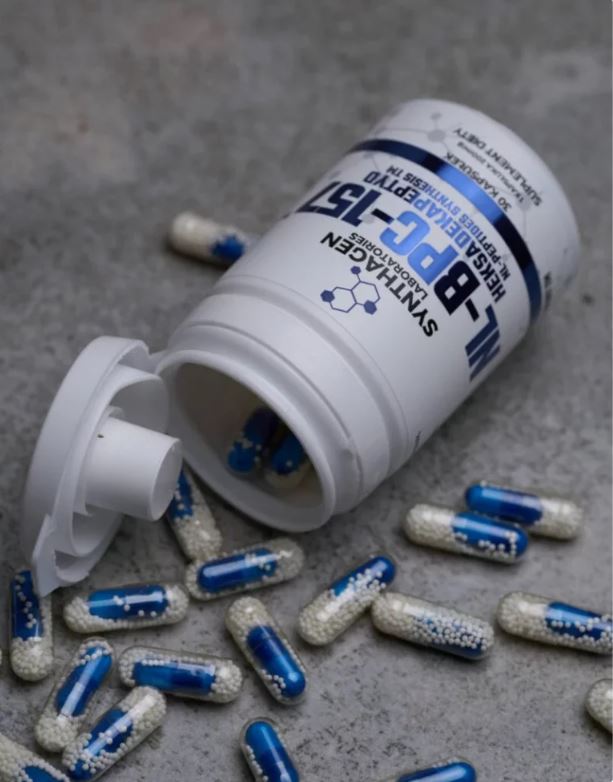
The effect of BPC-157 on injuries to the musculoskeletal and skeletal systems. Peptide therapy supports wounds, burns, and cuts.
Can peptides be taken orally?