 English


Anti-wrinkle, anti-aging, protective and regenerative effect for the skin. Peptide therapy for hair loss and weakening.
Summary: NLGHK-Cu as a tripeptide with the amino acid sequence glycyl-histidyl-lysine is a naturally occurring tripeptide in human plasma. It is considered a strong rebuilding and regenerative peptide. The peptide has a multifaceted biological activity profile, stimulating anti-aging, rebuilding, regenerative, repair and care processes for skin and hair.
Keywords: skin; exposome; hydrolipid barrier; hydrolipid film; NL GHK-Cu; aging; theory gene theory; limited cell division theory; protein disorder theory; membrane theory; mitochondrial theory; photoaging; intrinsic aging; hair loss; wrinkles; UV skin damage; pustule; spot; papule; blister; nodule; wheal; damage; dermatoses; wounds; skin care; tissue remodeling; alopecia
List of abbreviations: ATP-adenosine-5′-triphosphate; DNA-deoxyribonucleic acid; GHK-Cu-tripeptide-1 Gly-His-Lys; MMP-matrix metalloproteinases; SOD-superoxide dismutase
INTRODUCTION
NL GHK-Cu as a signaling peptide consists of 3 amino acids: glycine, histidine and lysine, structurally bound with copper. The copper complex is important because many enzymes in the human body cannot function without it. Copper is present in several enzymes in the body, including the important antioxidant enzyme superoxide dismutase (SOD). The NL GHK-Cu peptide promotes exceptionally effective anti-aging effects for the skin and additionally reduces discoloration, skin damage, regenerates and accelerates wound healing, inhibits scar formation and supports the hair growth phase while inhibiting hair loss processes. It improves the condition of aging skin and accelerates hair growth. Interested? Read our customer reviews! GHK CU reviews
SKIN STRUCTURE
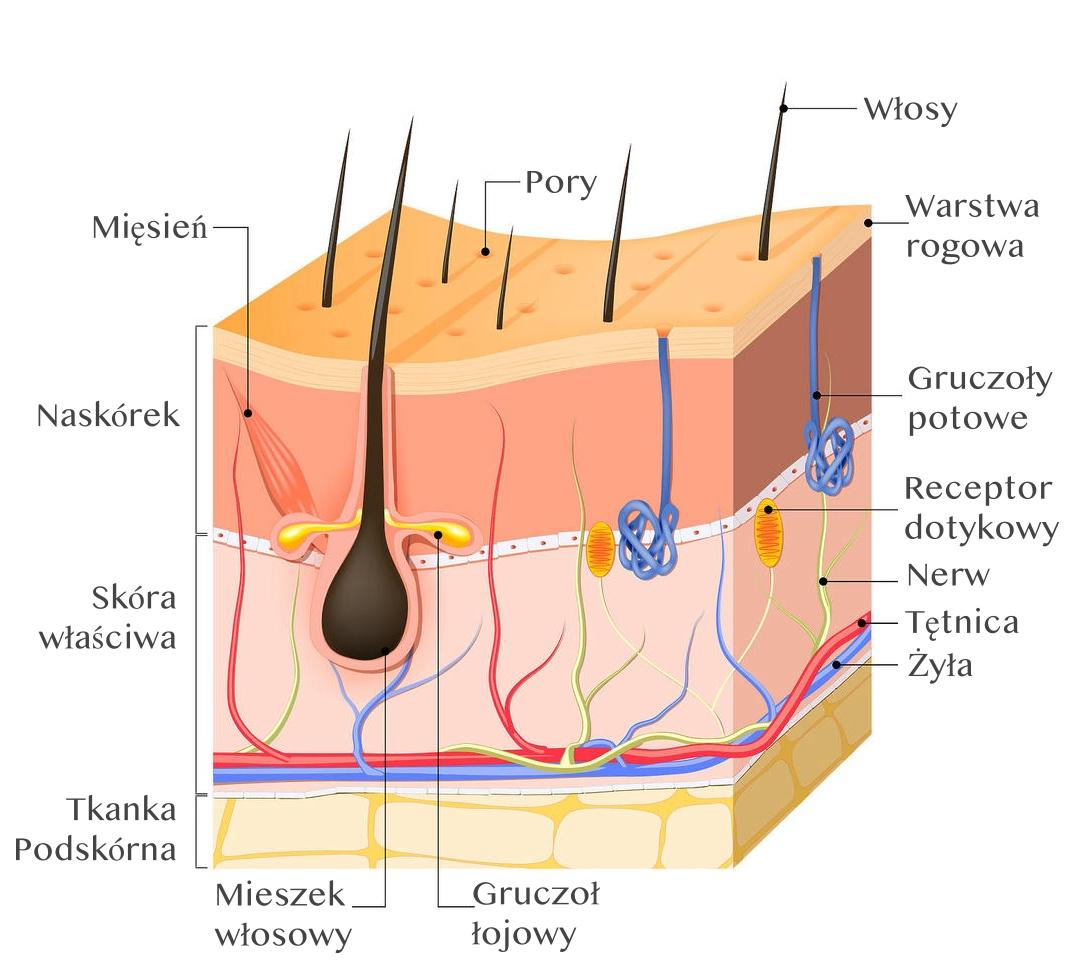
The skin covering our body is one of the largest organs of the human body. Its condition often reflects the condition of the entire organism. The skin consists of three layers: epidermis, dermis and subcutaneous tissue. The epidermis is the outermost layer and includes the basal, spinous, granular, clear and cornified layers. It has no blood or lymphatic vessels. The dermis includes the papillary and reticular layers and skin appendages. The subcutaneous tissue, together with adipose tissue, shapes the body and connects the dermis with muscles, tendons and bones. Skin appendages include hair follicles, eccrine and apocrine sweat glands, sebaceous glands, blood and lymphatic vessels and nerve endings. The nervous network is located in the dermis, and the skin is supplied by arterial, venous and lymphatic vessels. The skin surface is covered by a lipid film and exfoliated epidermis.
SKIN FUNCTIONS
The human skin performs many physiological functions. It protects internal organs from harmful environmental, physical, chemical and microbiological factors and maintains balance between the body and its environment. The most important functions include protection, thermoregulation, participation in water and excretory balance, involvement in synthesis and metabolism of proteins, lipids and carbohydrates, immune response and sensory perception. Healthy skin is free of damage caused by improper care or environmental factors, tolerates temperature and humidity changes well and reacts properly to most skincare products.
EXPOSOME – FACTORS AFFECTING SKIN CONDITION
The exposome is a relatively new concept used to describe all factors influencing the condition of human skin. It includes all daily environmental exposures and is divided into three groups:
A.Internal, including metabolism, hormone levels, body composition, physical activity, gut microbiota, inflammation, oxidative stress and aging;
B.General external, related to stress, climate and living environment (urban/rural);
C.Specific external, including chemical pollution, environmental pollution, infectious agents, radiation, smoking, alcohol consumption, work, diet and lack of sleep. It is estimated that 80% of factors affecting skin condition are related to lifestyle.
HYDROLIPID BARRIER
The epidermis, as the outermost layer of the skin, is exposed to mechanical damage and environmental factors, therefore it is protected by the hydrolipid film. This barrier consists mainly of ceramides, cholesterol and free fatty acids and prevents water loss from the skin.
DAMAGE TO THE HYDROLIPID BARRIER
Damage to the lipid barrier can significantly worsen skin condition, leading to dermatoses and accelerated aging. Disruption of this barrier impairs its protective function.
PENETRATION OF EXPOSOME THROUGH THE HYDROLIPID BARRIER
Exposome exposure damages the hydrolipid barrier, allowing harmful agents to penetrate deeper skin layers. This leads to reduced cell adhesion, altered pH, impaired regeneration, increased water loss and reduced melanin-producing cells, weakening UV protection.
SKIN CHANGES RESULTING FROM BARRIER DAMAGE
Common symptoms include:
A. skin sensitivity;
B. redness, vascular problems, erythema;
C. dryness and dehydration;
D. pigmentation and uneven tone;
E. dull skin and comedones;
F. loss of firmness due to collagen degradation;
G. faster wrinkle formation;
H. increased susceptibility to injuries.
NL GHK-Cu PEPTIDE
The tripeptide Gly-His-Lys (GHK) is naturally present in human serum and cerebrospinal fluid and binds copper ions. It plays a role in wound healing and skin repair by stimulating collagen synthesis in fibroblasts and supporting stem cell survival.
NL GHK-Cu AND SKIN DAMAGE CONSEQUENCES
Scientific studies confirm that NL GHK-Cu has a broad therapeutic effect on skin aging, including wrinkle reduction, improved elasticity, increased skin thickness, reduced photoaging and pigmentation, and stimulation of keratinocytes and fibroblasts.
SKIN PENETRATION OF NL GHK-Cu IN COSMETICS
Cosmetic forms of NL GHK-Cu penetrate the epidermis at varying rates depending on skin condition and formulation properties. The process includes adsorption, penetration into the dermis and resorption into deeper tissues.
NL GHK-Cu IN CAPSULE FORM
Chemical modifications of NL GHK-Cu improve its stability and resistance to digestive breakdown, allowing systemic absorption when administered orally. Combined topical and oral use may enhance therapeutic effects.
EXPERIMENT 1: PENETRATION INTO THE BODY
GHK-Cu in buffer solution showed increased transport through lipid membranes depending on pH, with copper ions doubling penetration efficiency.
SKIN AGING
Aging is a biological process involving reduced cellular activity, regeneration, immunity and adaptation. Wrinkles are the most visible sign.
THEORIES OF SKIN AGING
GENE THEORY
Aging is determined by genetic information encoded in DNA and influenced by mutations and repair mechanisms.
LIMITED CELL DIVISION THEORY
Cells can divide only a limited number of times due to telomere shortening, leading to cellular aging.
PROTEIN DISORDER THEORY
Reduced protein synthesis affects cellular communication and repair mechanisms, contributing to aging.
MEMBRANE THEORY
Changes in cell membrane composition reduce transport efficiency and increase cellular rigidity.
MITOCHONDRIAL THEORY
Mitochondrial dysfunction reduces ATP production and accelerates aging processes.
TYPES OF SKIN AGING
- Intrinsic aging – natural biological aging;
- Photoaging – caused by UV exposure.
SKIN CHANGES TABLE
| FEATURE | INTRINSIC AGING | PHOTOAGING |
| Clinical appearance | Smooth, uniform, less elastic | Rough, uneven, wrinkled |
| Surface appearance | Benign growths | Sun spots and lesions |
| Epidermis (living layer) | Thin, slow regeneration | Atrophy |
| Dead layer | Normal thickness | Thickened |
| Dermal-epidermal junction | Flattening | Flattening |
ANTI-AGING ROLE OF NL GHK-Cu
NL GHK-Cu reduces collagen degradation and modulates MMP-1 activity, promoting collagen and elastin production and improving skin structure and elasticity.
EXPERIMENT 2: ANTI-AGING EFFECT
Clinical studies showed wrinkle reduction, improved elasticity and skin firmness after two weeks of use.
NL GHK-Cu AND UV PROTECTION
NL GHK-Cu inhibits matrix metalloproteinases induced by UV exposure, supports collagen regeneration and improves skin resilience.
SKIN LESIONS
Dermatoses include primary and secondary lesions, often used for diagnostic purposes.
TYPES OF SKIN LESIONS
A. spot;
B. pustule;
C. papule;
D. blister;
E. wheal;
F. nodule.
NL GHK-Cu IN SKIN LESION TREATMENT
Treatment depends on cause and severity. NL GHK-Cu may be used as supportive therapy in mild conditions.
WOUNDS AND SKIN DAMAGE
A wound is a disruption of skin continuity caused by external factors. Healing includes hemostasis, inflammation, proliferation and remodeling phases.
TYPES OF WOUNDS
A. simple;
B. complex;
C. complicated.
NL GHK-Cu IN WOUND HEALING
The peptide reduces inflammatory cytokines and promotes faster wound healing and reduced scar formation.
SKIN CARE
Daily skincare is essential due to environmental exposure. Skin aging begins around age 25.
ROLE OF NL GHK-Cu IN SKIN CARE
NL GHK-Cu improves skin texture, elasticity and protection against environmental damage.
TISSUE REMODELING
A balance between tissue breakdown and regeneration is essential for healthy skin. Aging occurs when degradation exceeds regeneration.
ROLE OF NL GHK-Cu IN TISSUE REMODELING
The peptide stimulates fibroblasts and keratinocytes, improving collagen synthesis and skin structure.
HAIR LOSS AND ALOPECIA
Hair loss affects both men and women and may be caused by genetic, hormonal, nutritional and environmental factors.
TYPES OF ALOPECIA
1. Telogen effluvium – temporary hair loss due to stress or deficiencies.
2. Alopecia areata – autoimmune hair loss.
3. Scarring alopecia – permanent follicle damage due to inflammation or trauma.
NL GHK-Cu IN HAIR LOSS
NL GHK-Cu supports hair growth, enlarges hair follicles and may shift follicles from telogen to anagen phase.
BIBLIOGRAPHY
- Newton.V, Bradley.R, Seroul.P, Cherel.M, Novel approaches to characterize age-related remodelling of the dermal-epidermal junction in 2D, 3D and in vivo. Skin Res. 2017; 23:131–148.
- Amano.S, Characterization and mechanisms of photoageing-related changes in skin. Damages of basement membrane and dermal structures. 2016; 25: 14–19.
- Amano.S, Possible Involvement of Basement Membrane Damage in Skin Photoaging. 2009; 14: 2–7.
- Choi.E, Aging of the skin barrier. 2019; 37: 336–345.
- Sgonc.R, Gruber.J, Age-Related Aspects of Cutaneous Wound Healing. 2013; 59: 159–164.
- Regenerative and Protective Actions of the GHK-Cu Peptide in the Light of New Studies. 2018; 9(7): 1987. doi: 10.3390/ijms19071987
- Svirskis.D, Merrilees.M, Bolke.L, Effects of GHK-Cu on MMP and TIMP Expression, Collagen and Elastin Production, and Facial Wrinkle Parameters. 2016; 4:3. doi: 10.4172/2329-8847.1000166
- Pickart.L, Vasquez-Soltero.JM, Margolina.A, GHK Peptide as a Natural Modulator of Multiple Cellular Pathways in Skin Regeneration. 2015; 648108. doi: 10.1155/2015/648108


The Effect of Peptides on Blood Sugar Levels – What Does the Research Say?
Joint supplementation – what ingredients should you choose to protect your joints?