 English


BPC-157 is a peptide that has attracted scientific interest for its potential role in tissue repair, inflammatory processes, vascular function, and other biological mechanisms. Experimental studies have also examined its possible interactions with immune responses.
Research in this area is still developing, and much of the available evidence comes from laboratory and animal studies. For this reason, BPC-157 should not be considered an established treatment for infections or immune system disorders.
Keywords: BPC-157, immune system, immune response, BPC-157 research, inflammation, spleen, lymph nodes, antimicrobial activity
Abbreviations:
BPC-157 – Body Protection Compound 157
HSV-1 – Herpes Simplex Virus Type 1
LPS – Lipopolysaccharide
The Immune System
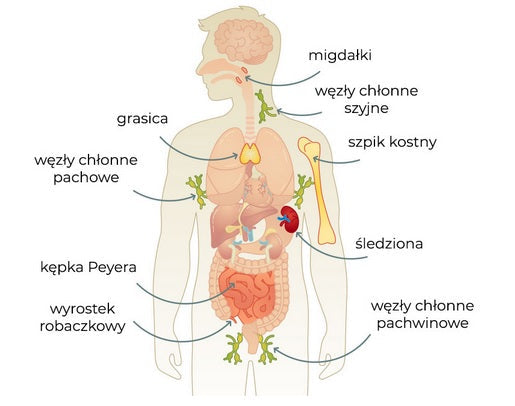
The immune system is a complex network of organs, tissues, cells, and signaling molecules that helps protect the body against potentially harmful microorganisms and other foreign substances.
One of its fundamental functions is the ability to distinguish the body's own cells from foreign material. The immune system can also develop immunological memory after exposure to certain antigens, allowing it to respond more efficiently when encountering them again.
Structure and Functions of the Immune System
The human immune system includes several functionally connected organs and cell types.
Primary lymphoid organs are responsible for the development and maturation of immune cells, while secondary lymphoid organs provide environments in which these cells can interact and participate in immune responses.
The Spleen
The spleen is an important lymphoid organ involved in filtering blood and supporting immune function. It contributes to the body's response to blood-borne antigens and also participates in the removal of damaged or ageing blood cells.
Although it is possible to live without a spleen, its removal may increase susceptibility to certain infections.
Lymph Nodes
Lymph nodes are small structures located throughout the body. They filter lymphatic fluid and provide an environment where immune cells can identify and respond to foreign substances.
Tonsils
The tonsils are part of the lymphatic system and are positioned where they can encounter microorganisms entering through the mouth and nose. They contain immune cells involved in recognising and responding to potential pathogens.
Important components of the immune system include:
-
T and B lymphocytes
-
macrophages
-
neutrophils and other granulocytes
-
natural killer (NK) cells
-
antibodies
-
other specialised immune cells and signalling molecules
BPC-157 and the Immune System
BPC-157 has been studied experimentally in relation to a variety of biological processes, including inflammation, tissue repair, vascular responses, and gastrointestinal protection.
Some preclinical studies suggest that BPC-157 may influence pathways involved in inflammatory and immune responses. Researchers have investigated its interaction with signalling mechanisms associated with inflammatory mediators and tissue injury.
However, these findings should be interpreted carefully.
Research involving BPC-157 remains predominantly preclinical, and there is currently insufficient high-quality human clinical evidence to establish BPC-157 as a treatment for immune system disorders.
BPC-157, Inflammation and Immune Response
Inflammation is an essential component of the body's immune response. It helps the body respond to injury, infection, and other biological stressors.
Certain experimental studies involving BPC-157 have explored its possible influence on inflammatory pathways and tissue-repair mechanisms.
These findings have generated scientific interest in the peptide's potential role in regulating biological responses following tissue damage.
However, an effect observed in laboratory or animal models does not automatically demonstrate the same clinical benefit in humans.
Further controlled human studies are needed to determine:
-
how BPC-157 interacts with human immune pathways;
-
whether these effects are clinically significant;
-
appropriate dosage and delivery methods;
-
potential adverse effects;
-
long-term safety.
BPC-157 and Antimicrobial Research
BPC-157 has also been discussed in experimental research concerning interactions between peptides, microorganisms, and inflammatory responses.
Some laboratory investigations into bioactive peptides examine their potential interactions with bacterial components such as lipopolysaccharides (LPS), as well as signalling molecules involved in inflammation.
This area remains experimental.
BPC-157 should therefore not be described as an established antimicrobial, antibacterial, antifungal, or antiviral treatment based on the currently available evidence.
BPC-157 and Herpes Virus Research
The original discussion surrounding BPC-157 and herpes viruses relates to experimental research into peptides and viral processes.
Herpes simplex virus type 1 (HSV-1) is an enveloped virus. Its lipid envelope plays an important role in the process through which the virus interacts with and enters host cells.
Although interactions between peptides and viral particles are an area of scientific research, evidence is currently insufficient to conclude that BPC-157 can prevent, neutralise, or treat HSV-1 infection in humans.
BPC-157 should therefore not be considered a replacement for established antiviral treatment or medical care.
Anyone experiencing symptoms of a herpes infection should consult an appropriate healthcare professional.
What Does Current Research Suggest?
Research into BPC-157 is primarily focused on experimental biological effects, including:
-
tissue repair and wound-healing mechanisms;
-
gastrointestinal protection;
-
vascular responses;
-
inflammatory processes;
-
interactions between different cellular signalling pathways.
Several studies have reported interesting findings in experimental models, but translating these observations into proven human health benefits requires substantially more clinical research.
This distinction is particularly important when discussing immune-related conditions, where many biological pathways interact with one another.
Summary
The immune system is a highly complex biological network responsible for identifying and responding to potential threats while maintaining balance within the body.
BPC-157 has attracted research interest because experimental studies have investigated its potential influence on tissue repair, inflammation, vascular function, and other processes that may interact with immune activity.
However, available evidence does not currently establish BPC-157 as a proven treatment for infections, herpes virus, or immune system disorders.
Further well-designed human clinical studies are required to better understand its biological effects, safety profile, optimal administration, and potential clinical applications.
Bibliography
-
Knezevic M., Gojkovic S., Krezic I., Zizek H., Knezevic T. Occluded Superior Mesenteric Artery and Vein. Therapy with the Stable Gastric Pentadecapeptide BPC 157. Biomedicines. 2021;9(7):792. DOI: 10.3390/biomedicines9070792.
-
Seiwerth S., Milavic M., Vukojevic J., et al. Stable Gastric Pentadecapeptide BPC 157 and Wound Healing. Frontiers in Pharmacology. 2021;12:627533. DOI: 10.3389/fphar.2021.627533.
-
Gojkovic S., Krezic I., Vranes H., Zizek H., Drmic D., et al. BPC 157 Therapy and the Permanent Occlusion of the Superior Sagittal Sinus in Rat: Vascular Recruitment. Biomedicines. 2021;9(7):744. DOI: 10.3390/biomedicines9070744.
Note: This article is intended for educational and informational purposes and does not constitute medical advice. BPC-157 research remains experimental, and the peptide should not be considered a substitute for approved medical treatment.


BPC-157 and Musculoskeletal Injuries: What Does the Research Show?
Can Peptides Be Taken Orally? Bioavailability and Oral Peptide Delivery