 English



Modern regenerative medicine continues to develop rapidly, with peptides attracting growing interest as tools for studying and supporting biological repair processes.
Peptides are short chains of amino acids that can participate in cellular signaling and influence processes associated with tissue maintenance and regeneration. Current research is exploring their potential applications across areas such as skin biology, wound healing, orthopedics, dentistry, and regenerative medicine.
In this article, we look at how peptides interact with regenerative processes, why controlled-release technologies are being investigated, and where peptide-based approaches are currently being studied.
How Do Peptides Work in Tissue Regeneration?
Peptides can act as biological signaling molecules, interacting with cells and receptors involved in a wide range of physiological processes.
Depending on the peptide and biological context, research suggests that certain peptides may influence processes involving fibroblasts, keratinocytes, collagen production, angiogenesis, extracellular matrix remodeling, and cellular repair.
These mechanisms are particularly relevant to tissue regeneration because fibroblasts and other structural cells play important roles in maintaining connective tissue and supporting normal healing processes.
Peptide research therefore extends beyond skin biology and may also include areas involving muscles, tendons, cartilage, and other tissues.
Some peptides are also being investigated for their potential influence on inflammatory and immune-related pathways. However, their effects vary considerably depending on the specific peptide, formulation, dose, delivery method, and research model.
Why Are Controlled-Release Peptide Systems Important?
One of the challenges associated with peptide research is stability.
Peptides can be sensitive to enzymatic degradation and other biological conditions, which may limit how long they remain active in a particular environment.
For this reason, researchers are studying controlled-release and delivery technologies designed to protect peptides and provide more gradual or targeted delivery.
Examples include:
-
Microspheres
-
Liposomes
-
Hydrogels
These delivery systems may help control how peptides are released and potentially improve their stability within experimental or therapeutic formulations.
Hydrogels, for example, are widely investigated in regenerative medicine because they can create a supportive environment for tissue engineering and localized delivery.
Researchers are also exploring systems that combine multiple bioactive compounds within a single delivery platform.
Areas Where Peptides Are Being Studied
Peptides and peptide-based materials are being investigated across several areas of medicine and biomedical research.
Aesthetic Medicine and Skin Research
Peptides are widely studied in dermatology and cosmetic science because some signaling peptides may influence processes associated with collagen production, skin structure, and extracellular matrix maintenance.
They are therefore commonly investigated in research relating to skin aging, appearance, and post-procedure recovery.
Orthopedics and Musculoskeletal Research
Research into regenerative biology also examines peptides in relation to muscles, tendons, ligaments, cartilage, and other connective tissues.
Scientists are studying how peptide signaling may interact with cellular processes involved in tissue maintenance and repair following mechanical stress or injury.
Much of this research remains experimental, and results may differ significantly between laboratory, animal, and human studies.
Dentistry
Peptides are also being explored within dental and periodontal research.
Potential research areas include:
-
periodontal tissue regeneration,
-
biomaterials for wound healing,
-
oral tissue repair,
-
antimicrobial peptide research,
-
and regenerative dentistry.
Peptide-based biomaterials may become increasingly relevant as tissue-engineering technologies continue to develop.
Regenerative Medicine and Wound Research
Peptides and peptide-containing biomaterials are actively investigated in regenerative medicine, particularly in relation to wound-healing mechanisms.
Research has examined their potential involvement in processes such as:
-
cellular proliferation,
-
collagen formation,
-
angiogenesis,
-
extracellular matrix remodeling,
-
and re-epithelialization.
These biological processes are important parts of normal tissue repair.
However, research findings should not be interpreted as evidence that every peptide provides the same regenerative effect or that experimental peptides are approved treatments for wounds or medical conditions.
Peptides Commonly Discussed in Regeneration Research
Several peptides have attracted interest in research relating to cellular signaling, tissue biology, aging, and neurological processes.
| Peptide | Research Area | Common Research Focus |
|---|---|---|
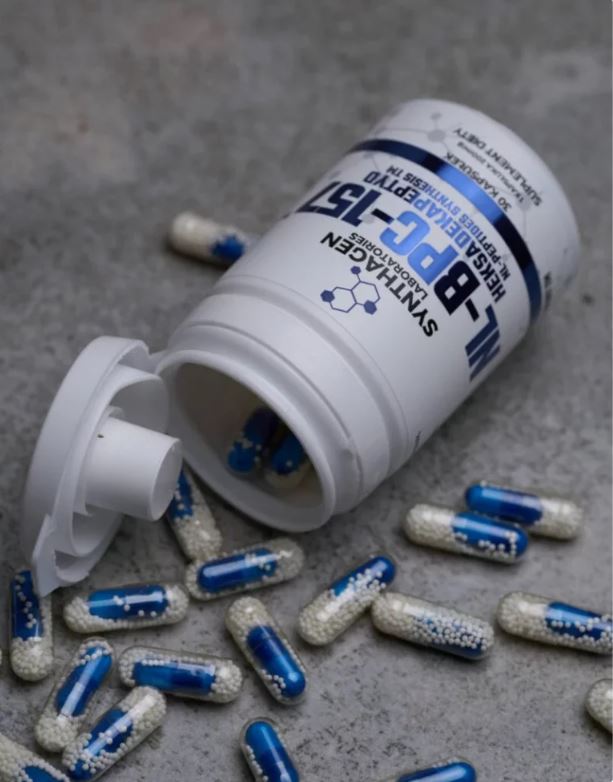
| NL-BPC-157™ | Tissue biology | Experimental research relating to gastrointestinal and connective tissue processes |
| NL-GHK-Cu™ | Skin and connective tissue | Collagen biology, skin research, and tissue remodeling |
| NL-Epithalon™ | Aging research | Cellular aging and biological rhythm research |
| NL-Selank™ | Neuroscience | Stress-response and neurological research |
| NL-Semax™ | Neuroscience | Cognitive and neurobiological research |
| NL-Cortagen™ | Cellular research | Nervous-system and tissue-related research |
Different peptides interact with different biological pathways, so their effects cannot be generalized.
The appropriate interpretation of peptide research depends on the available scientific evidence for each individual compound.
The Future of Peptides in Regenerative Medicine
Peptide research is developing alongside advances in biotechnology, biomaterials, tissue engineering, and controlled drug-delivery systems.
One particularly promising area involves combining peptides with delivery technologies such as hydrogels, nanoparticles, liposomes, and other biomaterials.
These systems may allow researchers to:
-
improve peptide stability,
-
control release over time,
-
deliver compounds to specific tissues,
-
and better study biological responses.
Future research will help determine which peptide-based approaches can successfully translate from laboratory studies into established clinical applications.
Frequently Asked Questions
What are peptides?
Peptides are short chains of amino acids. Many occur naturally in the human body and participate in biological signaling and regulatory processes.
Can peptides support tissue regeneration?
Some peptides are being investigated for their potential role in biological processes associated with tissue repair and regeneration. Their effects depend on the specific peptide and the available scientific evidence.
Why are controlled-release systems used with peptides?
Controlled-release technologies are designed to protect sensitive compounds and regulate how they are released. In peptide research, these systems may improve stability and provide more controlled delivery.
Are peptides used in regenerative medicine?
Certain peptide-based compounds and biomaterials are used or investigated in medical research. However, research-stage peptides should not automatically be considered approved medical treatments.
Can different peptides be combined?
Researchers sometimes study combinations of peptides or other bioactive molecules. Their compatibility, safety, and effectiveness depend on the specific compounds and formulation involved.
Summary
Peptides represent an important and expanding area of regenerative medicine research.
Their ability to participate in cellular signaling makes them particularly interesting for studying processes associated with collagen production, tissue remodeling, angiogenesis, skin biology, and cellular repair.
At the same time, peptide research is highly compound-specific. Findings from one peptide or experimental model cannot automatically be applied to another.
Advances in controlled-release systems, biomaterials, and tissue engineering may help researchers better understand how peptide-based technologies can be used in future regenerative applications.
Further well-designed research, particularly human clinical studies, will be essential for establishing the safety and effectiveness of individual peptide-based approaches.


Peptide Safety: Facts, Myths and What You Should Know
Antibiotics, Stress and Treatments: What Happens to the Digestive System?