 English


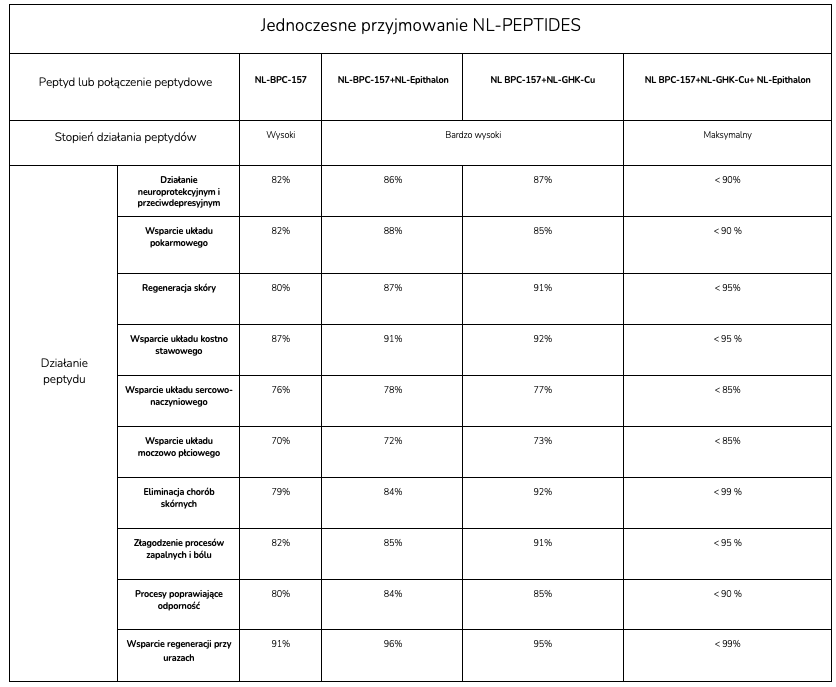
Peptides are short chains of amino acids that play many different roles in biological systems. Because of their involvement in signalling, tissue processes and cellular communication, they have become an important area of scientific research.
NL-Peptides were developed as modified peptide formulations designed with stability in mind. Research into peptide stability, absorption and biological activity continues to evolve, and it is important to distinguish experimental findings from clinically established effects.
In this article, we take a closer look at NL-BPC-157, NL-GHK-Cu and NL-Epithalon and explain the areas in which related peptides have been studied.
What are NL-Peptides?
NL-Peptides are peptide-based formulations developed with the aim of improving stability under different environmental conditions.
Peptide stability can be influenced by factors such as temperature, pH, formulation and the route by which a compound is administered. Modifications to peptide structure or formulation may therefore affect how a peptide behaves under laboratory or physiological conditions.
However, improved stability does not automatically mean that a specific clinical effect has been demonstrated in humans. Each peptide and formulation requires appropriate scientific evaluation.
NL-BPC-157 and current research
BPC-157 is a synthetic peptide that has attracted attention in experimental research, particularly in relation to tissue repair and regenerative processes.
Most of the available evidence comes from laboratory and animal studies. Researchers have investigated its potential interaction with processes associated with:
- tissue regeneration;
- inflammatory signalling;
- gastrointestinal tissue;
- musculoskeletal repair;
- vascular processes.
These areas remain scientifically interesting, but human clinical evidence is still limited.
For this reason, BPC-157 should be discussed as an investigational peptide rather than an established treatment for specific medical conditions. Recent scientific reviews continue to highlight the lack of large, well-controlled human trials and validated clinical dosing protocols. PubMed
NL-GHK-Cu and current research
GHK is a naturally occurring tripeptide that can bind copper ions, forming the complex commonly known as GHK-Cu.
GHK-Cu has been widely studied in connection with skin biology and tissue-remodelling processes. Experimental research has examined its possible role in areas such as:
- collagen-related processes;
- skin appearance and elasticity;
- tissue repair;
- extracellular matrix regulation;
- inflammatory signalling.
GHK-Cu is also used in some cosmetic formulations.
However, the strength of evidence varies depending on the application. Recent reviews note that although there is a substantial body of preclinical research, high-quality human clinical evidence remains comparatively limited for many claimed effects. PubMed
NL-Epithalon and current research
Epithalon, also known as Epitalon, is a synthetic tetrapeptide that has been investigated in research related to ageing and cellular processes.
Studies have explored subjects including:
- cellular ageing;
- oxidative processes;
- melatonin-related pathways;
- telomerase activity;
- neuroendocrine mechanisms.
Many of these findings come from experimental or preclinical research. Although Epithalon remains an interesting research compound, these findings should not be interpreted as proof that it prevents age-related diseases, extends human lifespan or treats neurological disorders.
Further clinical research is necessary before definitive conclusions can be drawn about its effects in humans. PubMed
Are peptides free from side effects?
No biologically active compound should automatically be considered free from potential adverse effects.
Safety can depend on several factors, including the specific peptide, formulation, amount used, method of administration, individual health status and interactions with other substances.
For many investigational peptides, long-term human safety data remain limited.
Therefore, broad statements such as “peptides do not cause side effects” should be avoided.
Can several peptides be used together?
Different peptides act through different biological pathways, and combining compounds may introduce additional variables related to safety, interactions and overall biological activity.
There is currently insufficient clinical evidence to make a universal claim that combining several peptides is safe or that combinations produce better results.
Research concerning individual peptides and peptide combinations should therefore be evaluated separately.
Why peptide research is evolving
Peptide science has expanded rapidly in recent years because peptides may interact with highly specific biological mechanisms.
Researchers are studying peptides across many areas of biology, including:
- cell signalling;
- regenerative mechanisms;
- skin biology;
- metabolic pathways;
- tissue remodelling;
- ageing-related processes.
However, an important distinction must always be made between preclinical research, early human studies and clinically established therapies.
Conclusion
NL-BPC-157, NL-GHK-Cu and NL-Epithalon belong to a growing field of peptide research.
Experimental studies have explored their potential involvement in several biological processes, but the quality and quantity of human clinical evidence vary significantly between compounds.
For this reason, research findings should be interpreted cautiously and should not be presented as proof of treatment, prevention or guaranteed health benefits.
As peptide research develops, larger and better-controlled human studies will be necessary to establish safety, efficacy and appropriate applications.


BPC-157 and Regenerative Processes: What Does the Research Show?
Dosis de péptidos: qué factores se estudian y qué dice la investigación