 English


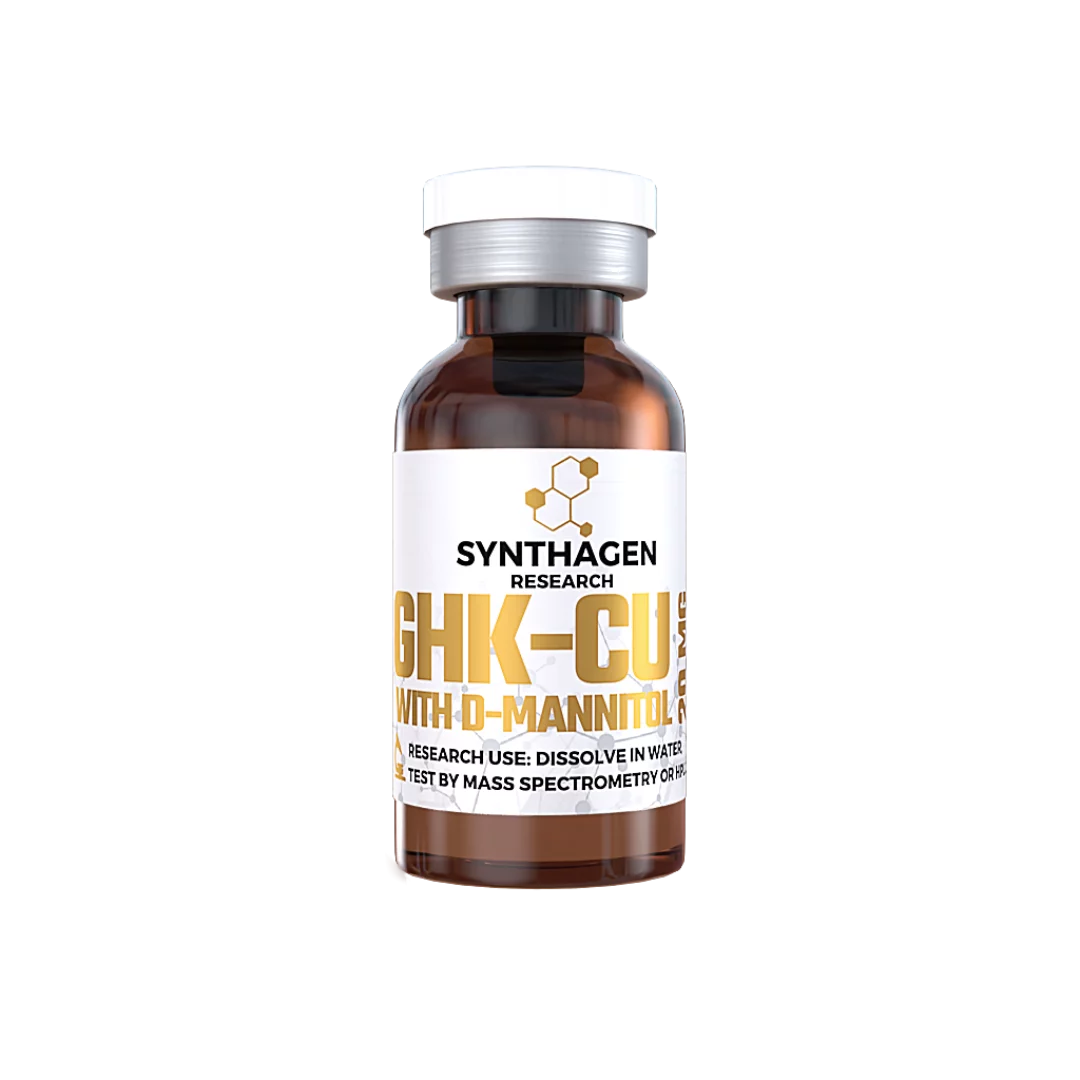


GHK-CU HAS REGENERATIVE AND PROTECTIVE EFFECTS THANKS TO:
- Activation of collagen and elastin synthesis – stimulates fibroblasts to regenerate skin, muscle, and tendon tissues.
- Antioxidant activity – neutralizes free radicals and protects DNA from oxidative stress.
- Regulation of the inflammatory response – reduces inflammation and supports the healing process.
- Stimulation of angiogenesis – supports the formation of new blood vessels and improves microcirculation.
- Supports hair growth – activates hair follicle cells and stimulates the keratinization process.
💡 The result: firmer, more elastic skin, faster regeneration after injuries and treatments, and visible improvement in the condition of hair and tissues.


GHK-CU PEPTIDE STRUCTURE
- Amino acid sequence: Gly-His-Lys
- Summary formula: C₁₄H₂₄N₆O₄ + Cu²⁺
- Molecular weight: 340,88 g/mol (without copper ion)
- Form: blue lyophilisate (characteristic color comes from the complex with copper ion), easily soluble in water

BIOLOGICAL RESEARCH AND EFFECTS
GHK-Cu and skin regeneration
GHK-Cu stimulates fibroblasts to increase the production of collagen, elastin, and glycosaminoglycans, improving skin structure and elasticity.
Clinical studies have demonstrated significant improvements in skin density, wrinkle reduction, and accelerated healing of micro-injuries.
GHK-Cu and the nervous system
The peptide exhibits neuroprotective properties, supporting neuronal regeneration and reducing oxidative stress in nerve cells.
Research suggests its potential to improve cognitive function and tissue regeneration following CNS injuries.
GHK-Cu and tissue and muscle regeneration
GHK-Cu promotes the proliferation of stem cells and fibroblasts, accelerating the repair of muscles, tendons, and capillaries.
In vivo models, shorter wound healing times and improved integration of type I and III collagen in damaged tissues have been observed.
GHK-Cu and hair growth
The peptide activates genes responsible for hair follicle regeneration and the growth phase (anagen).
Clinical studies have demonstrated increased hair density and an extended growth phase after using GHK-Cu.
GHK-Cu, oxidative stress and cellular aging
GHK-Cu increases the activity of antioxidant enzymes (SOD, catalase, ceruloplasmin), protecting cells from oxidative damage.
It supports the expression of genes responsible for DNA repair, which translates into slower cellular aging and longer lifespan.

Figure 1. In cell culture, tissues were treated with: a) GHK-Cu and UV light exposure (Tissue-PC), b) UV light exposure (Tissue-NC), and c) a negative control (no GHK-Cu or light exposure). As shown, the tissue treated with GHK-Cu showed the most pronounced fluorescence intensity (green line) and the greatest reduction in cell nuclei (blue, round dots). The green fluorescence intensity quantitatively reflects the collagen concentration, thus demonstrating the positive effect of the GHK-CU peptide on skin reconstruction and regeneration.
| Feature | Biological effect |
|---|---|
| Collagen and elastin synthesis | Skin firming and regeneration |
| Angiogenesis and microcirculation | Better blood supply and oxygenation of tissues |
| Antioxidant effect | DNA and mitochondria protection |
| Muscle and tendon regeneration | Accelerated healing of injuries |
| Hair growth | Stimulation of hair follicles and regeneration of the scalp |
Bibliography
- L.Pickart, A.Margolina, Regenerative and Protective Actions of the GHK-Cu Peptide in the Light of the New Gene Data. 2018; 19(7): 1987. 10.3390/ijms19071987
- F.Jiang, Y.Wu, Z.Liu, M.Hong, Y.Huang, Synergy of GHK-Cu and hyaluronic acid on collagen IV upregulation via fibroblast and ex-vivo skin tests. 2023; 22(9):2598-2604. doi: 10.1111/jocd.15763
- L.Pickart, A.Margolina, Regenerative and Protective Actions of the GHK-Cu. 2018; 19; doi:10.3390/ijms19071987
- Park JR, Lee H, Kim SI, Yang SR. The tri-peptide GHK-Cu complex ameliorates lipopolysaccharide-induced acute lung injury in mice. Oncotarget. 2016;7(36):58405-58417. doi:10.18632/oncotarget
- W Ma, M Li, H Ma, W Li, L Liu, Y Yin, X Zhou, G Hou.Protective effects of GHK-Cu in bleomycin-induced pulmonary fibrosis via anti-oxidative stress and anti-inflammation pathways 2019. 10.1016/j.lfs.2019.117139
- Pickart L, Margolina A. Regenerative and Protective Actions of the GHK-Cu Peptide in the Light of the New Gene Data. Int J Mol Sci. 2018;19(7):1987. Published 2018 Jul 7. doi:10.3390/ijms19071987